

Digital Forensics and Next Generation Criminal Solutions
What is Digital Forensics?
Digital forensics is the process of legally collecting and analyzing digital data and presenting it as evidence in court. The goal is to uncover the truth in an incident, proving whether a crime was committed, how and by whom through evidence.
Where does it operate?
Computers, smartphones, servers
Network devices, portable storage devices
Cloud services and other digital platforms
What data is examined?
Email and messaging records (SMS, application communications)
System logs, browser history
Images, videos and deleted files
Experts examine data without alteration through forensic copies (images) and compile findings into comprehensible reports. This evidence can be used in criminal investigations as well as intellectual property violations, contract disputes, and workplace disputes in civil cases.
Note: Don’t interfere with data when an incident occurs; professional support is critical for evidence integrity.
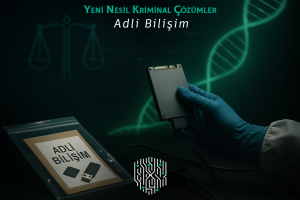 Digital Forensics
Digital Forensics Processes
Digital forensics follows an internationally standardized methodology to collect evidence without alteration and analyze it in a court-admissible manner. Four fundamental steps:
1) Identification
Determine what evidence is available, where it’s located, and in what format it’s stored (computer, phone, external drive, email, cloud, etc.).
2) Evidence Collection & Examination
Materials are secured through forensic copying (imaging). Original evidence remains untouched; work is conducted on exact copies. This preserves evidence integrity.
3) Analysis
Recovery of deleted files
Investigation of malware traces and attack methods
Examination of browser history, logs, emails, and messages
Creation of timeline and event sequence
Analysis can be repeated if needed to verify hypotheses.
4) Reporting & Presentation
Methods, findings, and conclusions are documented in a report that is both comprehensible and technically sufficient. The report serves as court evidence; expert witness presentation is provided when necessary.
Chain of Custody
Chain of custody is maintained at every step, all processes are documented. This ensures the validity and reliability of digital evidence throughout legal proceedings.
Important note: Don’t interfere with data, stop using systems, and get expert support.
Importance for Public Security
With digital life, cyber fraud, identity theft, data breaches, child abuse, corporate espionage, and critical infrastructure attacks have increased. Digital forensics plays a key role in solving these cases and ensuring justice.
What does digital forensics provide?
Identification of attacker methods and sources of attacks like ransomware
Collection and verification of digital evidence in phishing/fraud cases
Matching logs and access records in identity theft cases
Evidence production through image metadata and access records in child abuse cases
Reporting findings in a court-admissible manner
Not just investigation, but prevention:
Post-incident analysis helps organizations identify their vulnerabilities, close gaps, and reduce the risk of similar violations recurring. It raises awareness about the value of digital evidence among individuals and companies.
Correct steps during an incident:
Don’t tamper with or reset the device.
Stop using affected systems, preserve existing records.
Quickly get expert support; chain of custody is preserved.
Digital Forensics Services
DNA Criminal and Digital Forensics produces court-admissible results while preserving evidence integrity, serving everyone from individuals to businesses.
Digital Evidence Examination & Forensic Analysis
Examination through forensic copy (image):
Email, messaging, logs, browser history, deleted files
Analysis of unauthorized access, data breaches, phishing, ransomware
Output: Court-admissible report including timeline, findings, and methods.
Forensic Data Recovery
Recovery of deleted/formatted/damaged/encrypted data while preserving evidential value.
Disk/SSD, server, USB, memory card, mobile device
Output: Recovered data list, technical report, and recommendations.
Mobile Device Forensics
Analysis through forensic imaging of phones/tablets.
WhatsApp/SMS/social media, call records, location data
Recovery/analysis of photos, videos, and audio files
Output: Detailed mobile forensic analysis report.
Image & Audio Forensic Analysis (Video Forensic)
Authenticity and content examination of media files.
CCTV/video enhancement, license plate/face detection in blurry footage
Analysis of editing/manipulation; authenticity verification of audio recordings
Output: Expert witness-ready report based on scientific methods.
Consulting & Training
End-to-end support for corporate teams and law firms.
Incident response (IR), evidence management, storage/delivery processes
Awareness and user training (backup, correct steps during incidents, data breach prevention)
Output: Policy/documentation set, action plan, and training materials.
Why DNA Criminal and Digital Forensics?
With our Next Generation Criminal Solutions approach, we focus on technical accuracy, legal compliance, and speed.
Expertise & Experience: Certified digital forensics experts + lawyers experienced in IT law. 25+ years of field experience.
Trust & Confidentiality: Full compliance with chain of custody and confidentiality protocols; data processed only for intended purpose.
Current Technology: Modern forensic software/hardware; most suitable method for each case.
Clear Communication: We explain technical matters simply and provide regular updates throughout the process.
Fast & Effective Response (24/7): Emergency team for time-sensitive cases; minimizes damage, quickly secures evidence.
Our Promise: Scientific method, transparent process, reliable results.
Processes
We follow a transparent, documented, and court-admissible workflow in every project.
Initial Consultation & Quick Assessment
Case summary, timeline, and system status are obtained.
Risks and possible actions are explained in plain language.
Planning, Authorization & Contract
Devices/accounts to be examined, estimated time, and steps are planned.
Confidentiality and service agreements are signed.
Evidence Collection & Forensic Analysis
Evidence is secured through forensic copy (imaging); original evidence remains untouched.
On-site/laboratory data collection (disk, phone, cloud, network traffic), deleted data recovery, log and malware examination.
Interim updates are provided for significant findings.
Reporting, Delivery & Support
Methods, evidence, and evaluations are transformed into a clear report.
Online/face-to-face presentation and expert witness support provided if needed.
Support continues until the issue is fully resolved.
Chain of Custody: All processes are documented; validity and reliability of evidence is maintained.
Digital Forensics – Frequently Asked Questions (FAQ)
What does digital forensics do?
It legally collects and analyzes evidence-quality data from digital devices and platforms, producing court-admissible reports. It reveals how, when, and by whom incidents occurred through digital traces.
Who can become a digital forensics expert?
Graduates from computer engineering, software, electrical-electronic, digital forensics engineering, information security, or related fields who specialize in forensic tools and procedures. Knowledge of law and evidence management, chain of custody discipline is essential.
What is the salary of a digital forensics expert?
Varies by sector, city, institution (public/private), experience, and certifications. Entry-level salaries are close to market conditions, with higher packages (including benefits/bonuses) as seniority and expertise increase.
What are digital forensics crimes?
Digital forensics produces evidence for crimes such as unauthorized access, data breaches, system damage/interference, fraud (phishing), bank/credit card fraud, intellectual property theft, child abuse content, and corporate espionage.
What’s the difference between digital forensics and cybersecurity?
Cybersecurity deals with preventive and protective measures; digital forensics focuses on post-incident evidence collection and analysis. They complement each other.
What is a forensic copy (image)?
It’s a bit-by-bit copy of the original media; analysis is performed on this copy, leaving the original evidence untouched.
Can deleted files be recovered?
Depends on the device’s condition and level of overwriting. Quick response and proper tools increase chances of success.
Is extracting data from mobile devices (WhatsApp/SMS) legal?
It’s legal when done with authorized court order or legal consent and following forensic procedures. Other cases are illegal.
Can cloud data be examined?
Yes; “cloud forensics” can be performed on provider logs, access records, and account images with legal basis.
Is a digital forensics report valid in court?
Yes, if chain of custody is maintained, methods are documented, and it’s prepared by a qualified expert witness.
What tools are used?
Industry-standard software and hardware for disk/mobile imaging, log analysis, malware analysis, video/audio forensics (e.g., imagers, timeline and artifact analysis tools).
What should I do first when an incident occurs?
Don’t shut down or reset the device; stop using the system, preserve existing records, and call for expert support. Chain of custody must not be broken.
Why is digital forensics important for organizations?
Critical for post-breach root cause analysis, fulfilling legal obligations, minimizing reputational and financial damage. Helps prevent recurring incidents.
How long does digital forensics service take?
Depends on case scope, number of devices/accounts, and data volume. We share a timeline after initial assessment.
Will my data remain confidential?
We work with confidentiality agreements, role-based access, and documented processes. All steps are recorded.
Contact
 For technical support, forensic reporting, and professional defense;

 0552 676 11 00